Skeleton annotation to detect human activity
Have you ever wondered how smart fitness apps can measure your squats with precision, or how motion-capture systems create lifelike character animations? The answer lies in skeleton annotation, a core computer vision technique that enables machines to understand human or animal movement.
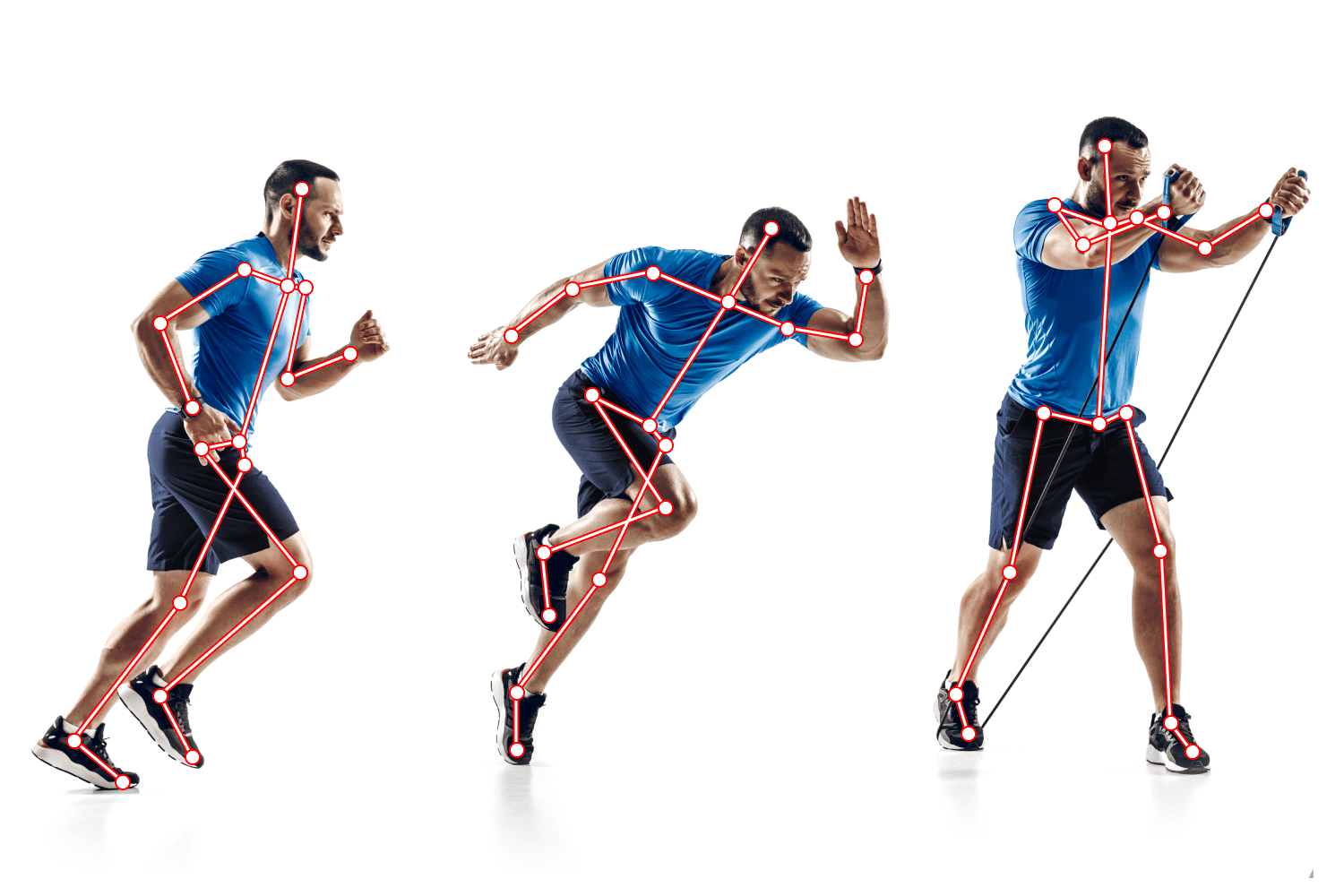
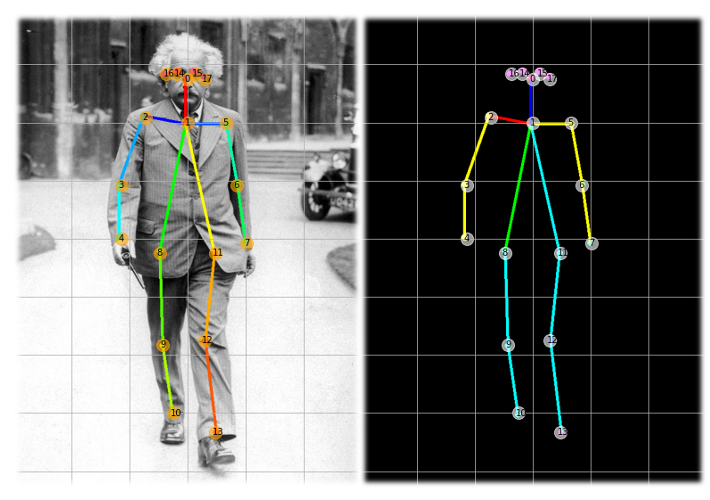
Skeleton annotation involves identifying key joints within an image or video—such as the head, shoulders, elbows, hips, knees, and ankles—and connecting these points with lines to form a stick-figure representation of the body. This simplified skeletal structure allows AI systems to analyze posture, movement dynamics, and interactions between different body parts.
High-quality skeleton annotation is essential for training Machine Learning models that must interpret physical behavior. From healthcare rehabilitation to sports performance analysis, security monitoring, virtual avatars, and robotics, skeleton annotation drives many real-world applications that require motion understanding.
Training Machine Learning Models
Skeleton annotation is not only about marking keypoints — it must be structured properly to be useful in AI training pipelines. Before annotated data is fed into models, it goes through a standard preparation and training workflow.
Data Preprocessing
To ensure the dataset is clean and consistent across different conditions, the following practices are commonly applied:
- Normalization: Keypoint coordinates from each frame are scaled to a standard reference system to reduce variations caused by image resolution or camera distance.
- Data Augmentation: Techniques like rotation, mirroring, or brightness adjustment artificially expand the dataset, helping the model generalize across different lighting, angles, and camera positions.
- Noise Reduction: Incorrect or incomplete annotations are removed to prevent the model from learning unwanted biases.
- Data Splitting: The dataset is divided into training, validation, and test sets to measure performance reliably and avoid overfitting.
Model Selection and Training
Several neural network architectures have been developed specifically for skeleton-based pose estimation. These include:
- Convolutional Pose Machines (CPM): Use convolutional layers to refine joint predictions across multiple stages.
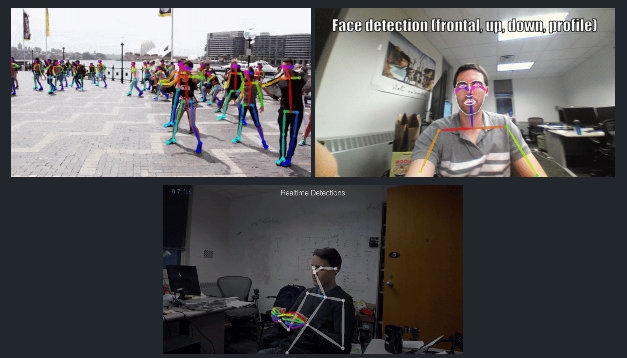
- OpenPose: Known for real-time, multi-person detection, capable of estimating body, face, hand, and foot keypoints in a single pass.
- DeepPose: A deep CNN-based architecture that directly regresses keypoint positions without intermediate segmentation.
These models are trained on large annotated datasets until they can recognize skeletal structures automatically, even in complex scenes.
Keypoint vs Skeleton Annotation
Keypoint Annotation
This approach identifies and labels individual joints or landmarks on the body without establishing relationships between them. It’s a building block for pose recognition tasks.
Skeleton Annotation
Skeleton annotation takes it further by linking keypoints into a structured representation of the body. By drawing lines between joints, it reveals how limbs relate and move together, enabling motion tracking rather than just static detection.
Why They Matter
Keypoints provide high-precision spatial references. Skeletons provide movement context, making them essential for activity recognition, biomechanical analysis, and gesture interpretation.
Applications of Skeleton Annotation
Human Pose Estimation
By mapping posture and alignment, pose estimation enables:
- Augmented reality experiences
- Virtual try-on systems in fashion retail
- Real-time workout assessment in fitness apps
Gesture Recognition
Tracking hand and body movements enables:
- Touchless user interfaces
- Sign language interpretation
- Robot control via motion commands
Healthcare and Rehabilitation
Skeleton-based systems allow:
- Automated posture correction
- Remote physiotherapy monitoring
- Gait analysis for neurological assessment
Wearable sensors combined with skeleton annotation can deliver continuous patient monitoring outside clinical environments.
Future Trends in Skeleton Annotation
Advancements in Deep Learning
Neural architectures are becoming more robust, enabling:
- Occlusion-resistant pose detection (even when body parts are hidden)
- Lightweight pose models suitable for mobile devices and edge AI
- Cross-species skeletal analysis for veterinary or wildlife applications
Integration with 3D Technologies
The evolution from 2D to 3D skeleton annotation is already underway. With depth sensors (like LiDAR or infrared-based cameras), systems can now:
- Understand joint rotation in 3D space
- Enable motion tracking for VR/AR environments
- Improve accuracy in robotic interaction and navigation
Skeleton annotation is becoming a core foundation of movement-aware AI. As technologies advance, we can expect:
- Fitness trackers that analyze every joint in motion
- Surveillance systems that detect suspicious behavior from posture alone
- Virtual assistants that understand gestures instead of voice commands
Every improvement in skeleton annotation brings machines one step closer to understanding us—not just visually, but physically and behaviorally. It is not just a labeling method; it is the bridge between motion and intelligence.
Coral Mountain Data is a data annotation and data collection company that provides high-quality data annotation services for Artificial Intelligence (AI) and Machine Learning (ML) models, ensuring reliable input datasets. Our annotation solutions include LiDAR point cloud data, enhancing the performance of AI and ML models. Coral Mountain Data provide high-quality data about coral reefs including sounds of coral reefs, marine life, waves….