
Most remote work today faces the same underlying economic pressure: commoditization driven by automation and global competition. Customer support is increasingly handled by chatbots. Data entry is replaced by automated pipelines. Freelance writing now competes directly with AI-generated content.
For many workers, the downward pressure on rates feels unavoidable.
AI training follows a fundamentally different path. As AI systems become more advanced, the work required to train them becomes more complex-not less. In 2020, AI trainers primarily labeled sentiment as positive, negative, or neutral, a task almost anyone could perform.
By 2023, the work evolved into evaluating preference pairs, where trainers judged which AI response demonstrated better reasoning, usefulness, or accuracy-requiring more nuanced human judgment.
Today, frontier AI training involves debugging multi-step reasoning, identifying logical breakdowns in complex proofs, and detecting subtle semantic errors that automated systems cannot reliably catch.
This progression matters because it creates an entirely different economic model. The ceiling for quality continues to rise. As a result, human expertise appreciates rather than depreciates. Training AI systems toward capabilities they do not yet possess cannot be automated by those same systems.
This is why AI training offers remote-work benefits that go far beyond flexibility. It provides a sustainable model where increasing complexity aligns with increasing compensation.
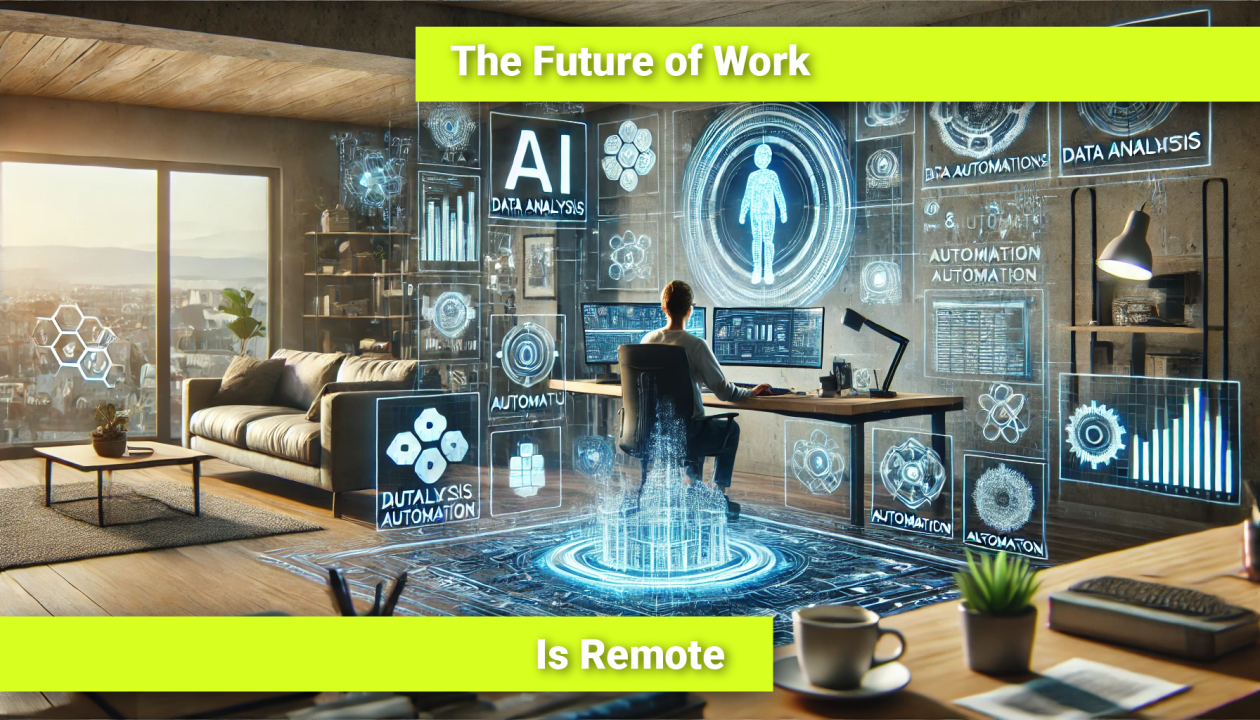
Earn financial benefits that scale with AI advancement
Traditional remote work typically emphasizes cost savings-less commuting, fewer meals out, lower wardrobe expenses. Many remote workers save between $6,000 and $12,000 per year simply by working from home.
But saving money is not the same as growing income.
Most remote platforms rely on flat-rate pay because they cannot reliably measure quality. When compensation is tied to task completion rather than judgment quality, workers who catch edge cases earn the same as those who simply follow patterns. Over time, this pushes platforms toward lower prices and workers toward higher volume.
AI training operates differently because quality can be measured.
At Coral Mountain, tiered compensation reflects demonstrated expertise:
- General AI training work starts at $20+ per hour
- Coding and STEM projects start at $40+ per hour
- Professional-domain work starts at $50+ per hour
As AI systems advance, the same contributor who once evaluated chatbot responses may later qualify to debug reasoning chains or assess domain-specific outputs. The work becomes more sophisticated-and more valuable.
Unlike most remote roles that trend toward commoditization, AI training trends toward specialization. The financial upside is not just retaining income, but building expertise that increases in value as the technology evolves.
Reclaim time for actual deep work, not just coordination
Skipping a daily commute saves roughly one hour per day. But what matters is how that time is used.
Many remote roles replace commuting with coordination-Slack messages, constant availability, meetings that fragment attention. While location changes, the work structure remains interrupt-driven.
AI training cannot function under those conditions.
Evaluating reasoning chains, reviewing code quality, or assessing logical consistency requires uninterrupted focus. Some tasks demand 30 minutes or more of sustained cognitive effort. These are not tasks that can be squeezed between meetings.
At Coral Mountain, the absence of mandatory meetings or fixed schedules is not a perk-it is a requirement. Work quality is evaluated through outcomes, not visibility. Contributors choose when they work because the work itself demands deep focus.
This allows people to align tasks with cognitive capacity. Learning in the morning, evaluating in the evening, or concentrating work into high-focus windows becomes possible in a way coordination-heavy remote work never allows.
The difference is simple: most remote jobs give you time back, then fill it with interruptions. AI training gives you time back for the kind of thinking the work actually requires.
Control your schedule around cognitive peaks, not office hours
Many remote roles promise flexibility but quietly retain office-style control: fixed online hours, rapid response expectations, and synchronous collaboration.
AI training breaks from that model because the work cannot be done effectively under constant interruption.
At Coral Mountain, all projects are asynchronous. There are no required online hours, no response-time metrics, and no penalties for stepping away. You work when you have the mental capacity to do high-quality work-whether that’s early morning, late evening, or focused afternoon blocks.
This structure enables genuine work-life integration rather than surface-level flexibility. The work adapts to your life, not the other way around.
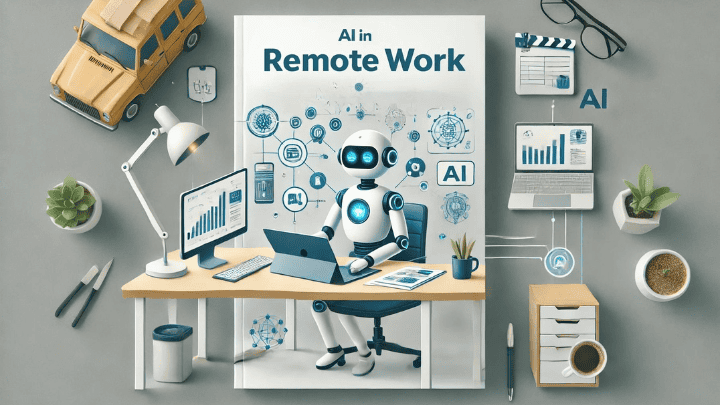
Build expertise that compounds value as AI advances
Most remote work is vulnerable to automation. Customer support, transcription, data entry, and even basic programming are increasingly handled by AI tools.
AI training is different because it sits upstream of automation.
When you evaluate AI outputs, you are not performing routine tasks-you are providing the feedback that teaches models what they cannot yet do. As AI systems improve, the feedback required to advance them becomes more sophisticated, not redundant.
A developer reviewing AI-generated code is not competing with automation-they are shaping it. Recognizing technical debt, algorithmic inefficiency, or poor design choices becomes more valuable as models generate increasingly polished but flawed outputs.
As AI capabilities rise, so does the importance of human judgment that distinguishes “correct” from “excellent.”
Develop capabilities through increasing work sophistication
Remote work often frees time, but time alone does not guarantee growth. Without intentional structure, reclaimed hours disappear into chores or fragmented tasks.
What drives growth is work that demands increasing sophistication.
AI training naturally does this. Tasks evolve as models advance. Evaluations become more complex. Judgment requirements deepen. Contributors develop stronger reasoning, clearer mental models, and sharper analytical skills simply by doing the work.
At higher tiers, contributors are trusted to identify errors that automated systems miss-mistakes that could cost AI companies millions in misdirected training.
Growth comes not from working more hours, but from contributing at higher levels of sophistication.
Who qualifies for AI training work?
AI training is not data entry. At Coral Mountain, it is a critical bottleneck in advanced AI development.
This work is well suited for:
- Domain experts who want their knowledge to matter
- Professionals who need flexible income without lowering intellectual standards
- Creative specialists who understand quality beyond surface-level correctness
- Individuals motivated by contributing to frontier AI capabilities
Whether through code evaluation, scientific reasoning, legal analysis, or linguistic judgment, your expertise helps shape systems that operate at global scale.
How to get an AI training job?
Coral Mountain uses a performance-based qualification system.
The process begins with a Starter Assessment that takes about one hour. It evaluates your ability to do the work-not your resume or credentials alone.
Once qualified, contributors can access:
- General AI projects starting at $20 per hour
- Multilingual projects starting at $20 per hour
- Coding and STEM projects starting at $40 per hour
- Professional-domain projects starting at $50 per hour
There are no minimum hours, no fixed schedules, and no penalties for stepping away. You choose projects that match your expertise and availability.
Explore AI training work at Coral Mountain today
The difference between AI systems that merely pass benchmarks and those that succeed in real-world deployment lies in training quality.
If you have the judgment to identify what automated systems miss, AI training at Coral Mountain places you at the center of next-generation AI development-not as a task executor, but as a critical decision-maker.
Getting started is straightforward:
- Visit the Coral Mountain application page and click “Apply”
- Complete the brief background form
- Take the Starter Assessment
- Receive your qualification decision
- Choose your first project and begin earning
No fees. Selective standards. One assessment attempt.
Apply to Coral Mountain if you understand why quality-not volume-drives real progress in AI.
Coral Mountain Data is a data annotation and data collection company that provides high-quality data annotation services for Artificial Intelligence (AI) and Machine Learning (ML) models, ensuring reliable input datasets. Our annotation solutions include LiDAR point cloud data, enhancing the performance of AI and ML models. Coral Mountain Data provide high-quality data about coral reefs including sounds of coral reefs, marine life, waves, Vietnamese data…