Data Annotation for Surgical AI
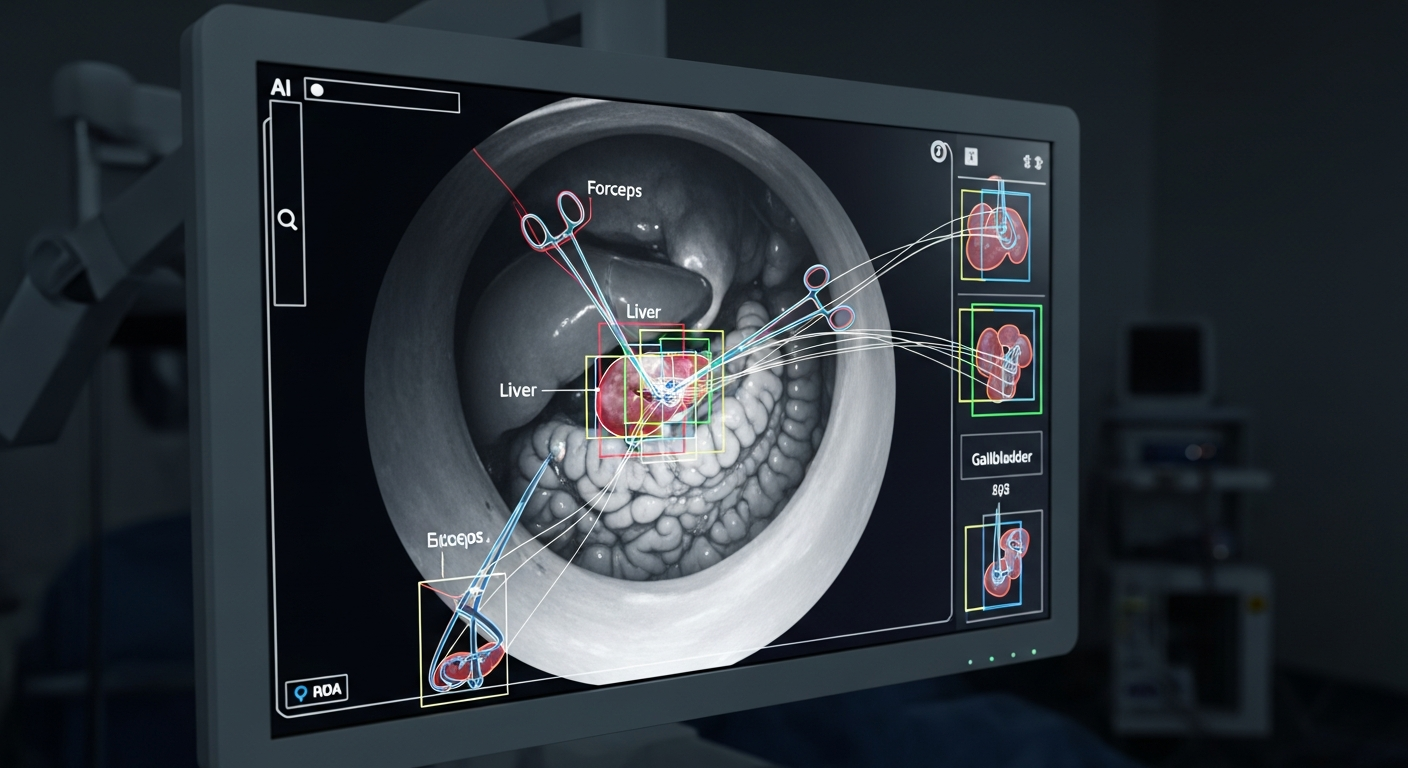
Precise data labeling for AI-powered minimally invasive, robotic, laparoscopic, and endoscopic surgeries, enabling accurate surgical instrument tracking and phase identification.
Core Capabilities
Advanced technology built for enterprise scale.

Board-Certified Surgeons
Specialists including general surgeons and gastroenterologists oversee annotation to ensure accurate interpretation of complex video.

Surgical Instrument Tracking
Categorizing instruments by type and segmenting them across multiple frames for precise tracking in robotic systems.

Surgery Phase Identification
Time-stamping each step of a procedure (incision, implantation, closure) to break down complex surgical workflows.

Anatomical Structure Annotation
Labeling critical tissues to enhance real-time navigation and prevent accidental damage during procedures.
Efficient Workflow Integration
Seamlessly capturing edge cases and long-tail pathophysiology for arthroscopy, laparoscopy, and endoscopy datasets.

Regulatory-Ready Preparation
Enhancing training data transparency to simplify FDA 510(k) clearances and advance robotic surgery toward autonomy.
Proven Applications
See how industry leaders are leveraging our solutions in production environments.
Discuss Your Use Case
Minimally Invasive Surgery
Enhancing accuracy for laparoscopic procedures, leading to smaller incisions, faster recovery, and reduced trauma.
Surgical Planning & Simulation
Generating annotated 3D models of patient anatomy so surgeons can practice and plan complex procedures.
Vascular Surgery AI
Improving aneurysm analysis and vessel segmentation for more precise evaluation of morphology and geometry.
Real-time Decision Support
Evaluating potential risks in real-time by identifying critical structures during active surgical procedures.
Urology & Oncology
Classifying prostate tumor histology, lymph node spread, and differentiating kidney stones in CT scans.
Robotic Surgical Autonomy
Training robots to predict tissue interactions and guide instruments with greater precision through annotated visual data.