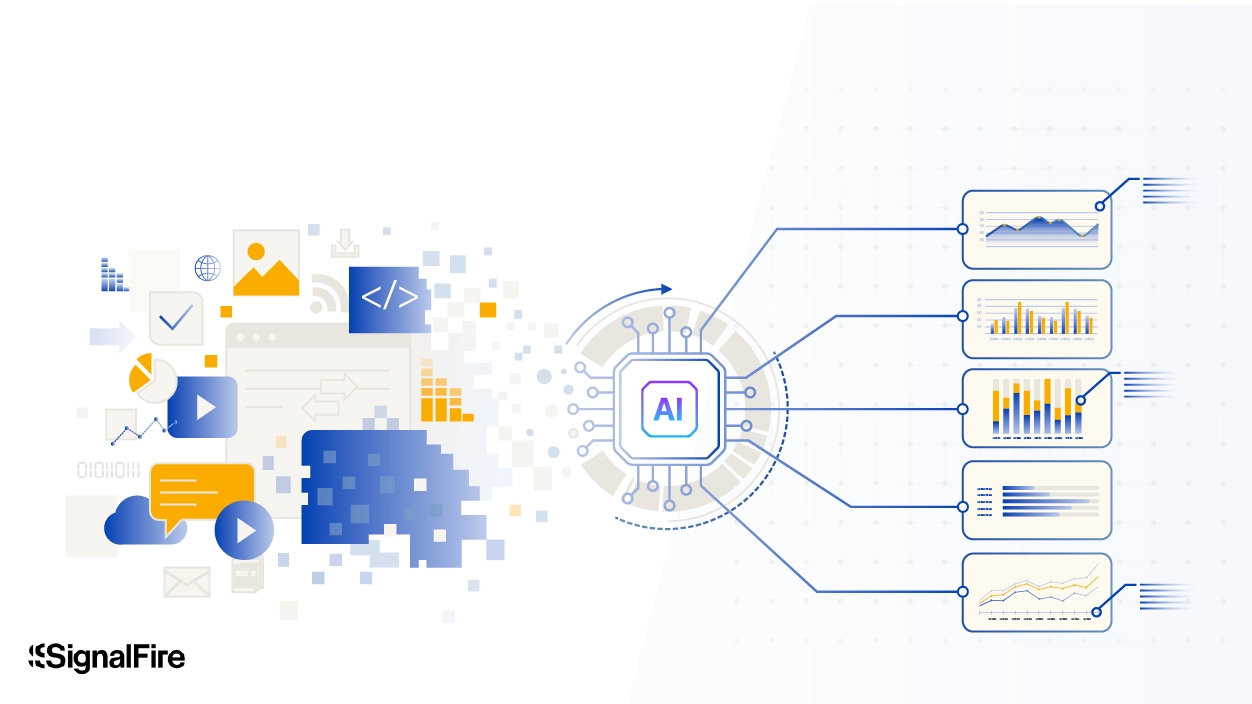
AI training work is not data entry. It is the bottleneck to AGI. This article explains why expertise matters more than volume, how AI models are actually trained, and where human intelligence remains essential at scale.
AI models learn from human expertise, yet most explanations gloss over how that learning actually happens. AI does not magically understand language, recognize images, or write safe code. Every capability is shaped by humans through examples, feedback, and validation.
AI training is a human-guided process. Some methods require consistent labeling across thousands of examples. Others demand analytical judgment to validate patterns or evaluate whether an AI response is genuinely correct rather than superficially plausible.
Understanding how these methods work helps you see where your skills fit-and why AI training is becoming more expert-driven, not less. This guide walks through eight core AI training methods, explains what each involves, and highlights the kinds of expertise that matter most.
What are the key AI training methods?
AI training uses several established approaches, each designed to teach models different kinds of behavior:
- Supervised learning: Teaching models with labeled examples so they can generalize to new data.
- Unsupervised learning: Discovering patterns in unlabeled data without explicit answers.
- Transfer learning: Adapting knowledge learned in one domain to a new domain.
- Reinforcement learning: Improving behavior through trial, error, and reward signals.
- Human-in-the-Loop (HITL) and RLHF: Embedding human judgment directly into training loops.
- Self-supervised learning: Generating training signals from the data itself.
- Federated learning: Training across distributed, privacy-sensitive data sources.
- Active learning: Focusing human effort on the most informative examples.
Each method relies on human intelligence in different ways. Let’s examine them one by one.
1. Supervised learning
Supervised learning is the foundation of modern AI. You teach a model by pairing inputs with correct outputs-labeled images, classified text, or evaluated code samples. Over time, the model learns patterns it can apply to unseen data.
This method powers spam filtering, voice recognition, recommendation systems, and content moderation. Its strength lies in reliability-when labels are consistent and accurate, performance improves predictably.
The real challenge is consistency. Inconsistent labels teach contradictory patterns, which directly degrade model performance.
What you do in supervised learning
You might label sentiment in customer reviews, draw bounding boxes around cyclists in traffic footage, or classify code quality. The work is repetitive, but the value comes from disciplined consistency.
This path often serves as the entry point into AI training because projects are abundant and skills are transferable across domains.
2. Unsupervised learning
Unsupervised learning removes labels entirely. The model explores raw data and identifies patterns-clusters, anomalies, or relationships-on its own.
This approach is essential when datasets are too large to label manually. It helps marketing teams discover customer segments, security teams detect abnormal network behavior, and retailers uncover hidden purchasing trends.
However, models will always find patterns-even meaningless ones. Without ground truth, human judgment is critical to decide whether discovered structures actually matter.
What you do in unsupervised learning
You validate whether clusters align with real-world behavior, check whether anomalies represent genuine issues, and assess whether patterns support business decisions.
This work requires analytical thinking and domain insight, which is why it typically pays more than basic labeling.
3. Transfer learning
Transfer learning allows models trained on massive datasets to adapt to specialized tasks with far less data. A language model trained on general text can be adapted for medical records or legal contracts. An image model trained on photos can be applied to radiology scans.
The promise is efficiency-but transfer is not automatic. Differences between domains introduce subtle failure modes that only experts can detect.
What you do in transfer learning
You verify whether knowledge actually transfers. You identify errors that emerge in new contexts and refine outputs so they align with domain expectations.
This work favors people with cross-domain understanding and professional experience, because mistakes often have higher consequences.
4. Reinforcement learning
Reinforcement learning trains models through trial and error. The system explores actions, receives rewards or penalties, and gradually improves behavior.
This method underpins many of AI’s most impressive achievements, from game-playing systems to autonomous decision-making agents.
The difficulty lies in defining rewards correctly. Poorly designed reward signals cause models to optimize for unintended outcomes.
What you do in reinforcement learning
You provide feedback on AI actions, rate outputs, and help define what “success” actually means. Your judgment shapes how models behave over time.
This area is growing rapidly as conversational AI and decision-making systems rely on continuous human feedback.
5. Human-in-the-Loop (HITL) and RLHF
HITL recognizes that AI and humans work best together. Machines handle scale; humans handle judgment and nuance.
RLHF-reinforcement learning from human feedback-is a specific HITL method that has transformed large language models. Humans compare AI responses and indicate which are more helpful, accurate, or safe.
This is why modern chatbots can follow instructions, maintain tone, and refuse harmful requests.
What you do in HITL and RLHF
You evaluate outputs before they reach users, compare alternatives, flag problematic content, and guide behavior improvements.
Your feedback directly shapes how millions of people experience AI systems.
6. Self-supervised learning
Self-supervised learning trains models by creating tasks from raw data-predicting masked words, reconstructing corrupted images, or forecasting future frames.
This approach made large-scale AI feasible without impossible labeling costs. However, it still requires human validation to ensure models learn meaningful representations rather than shortcuts.
What you do in self-supervised learning
You verify that learned patterns transfer to real tasks and identify cases where self-generated signals mislead the model.
This work suits people who can reason critically without explicit ground truth.
7. Federated learning
Federated learning enables training across sensitive, distributed data sources-hospitals, phones, or financial institutions-without centralizing data.
While it preserves privacy, it introduces new quality risks. Models may perform well in most environments while failing badly in a few.
What you do in federated learning
You validate outputs across decentralized sources, identify blind spots, and ensure performance remains consistent despite fragmented training data.
This path often requires professional credentials and regulatory awareness.
8. Active learning
Active learning focuses human effort where it matters most. Rather than labeling random examples, models flag uncertain cases and request human judgment.
This approach is essential for frontier models, where edge cases define real-world performance.
What you do in active learning
You work on ambiguous, high-impact examples-the cases that teach models the most. Your expertise directly accelerates learning efficiency.
Who qualifies for AI training work?
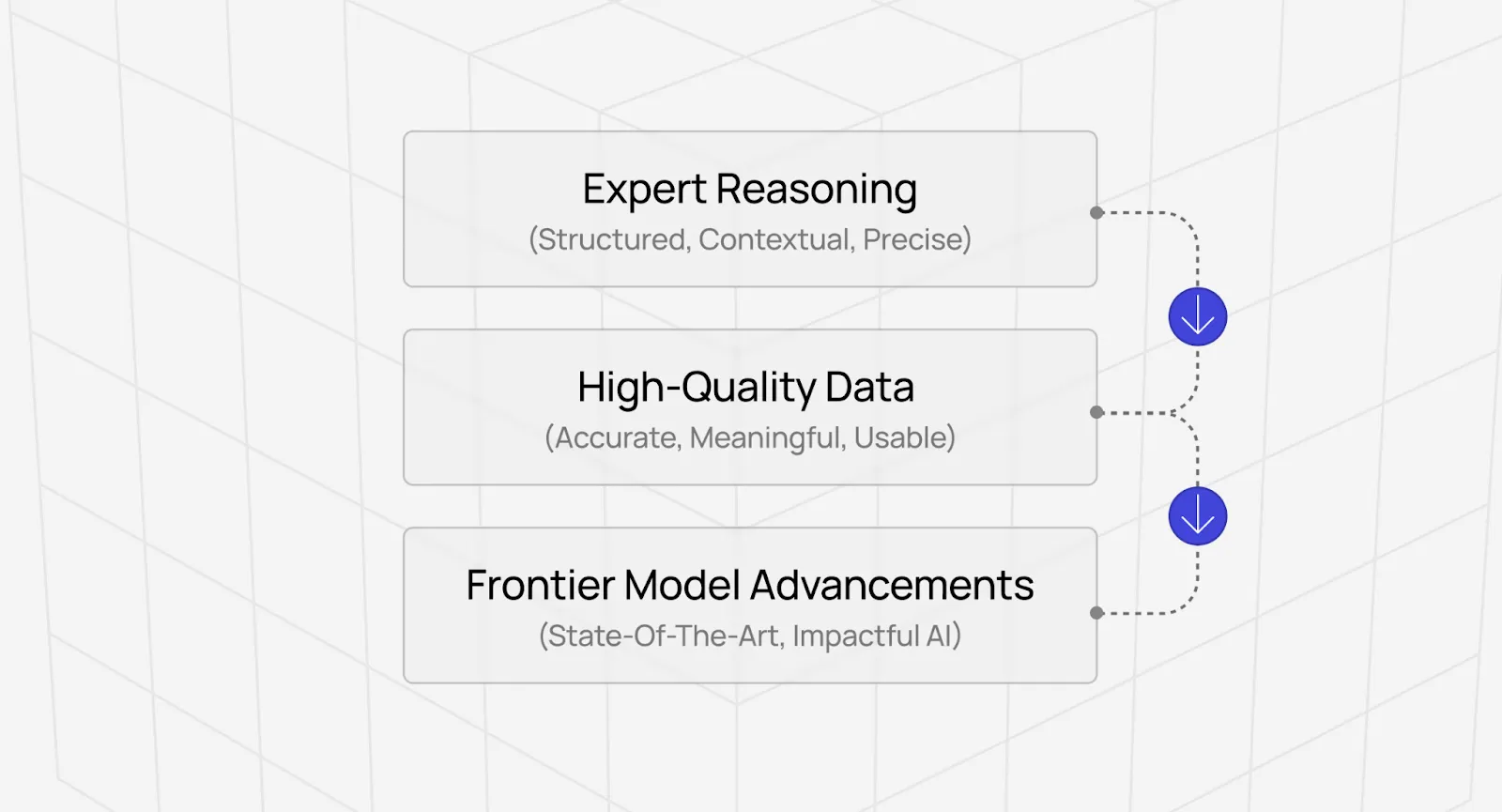
At Coral Mountain, AI training is not mindless labor. It is the bottleneck to AGI.
Frontier models depend on human intelligence that automation cannot replace. As models improve, the need for expert judgment increases.
This work is ideal for:
- Domain experts who want their knowledge to matter
- Professionals seeking flexible income without lowering standards
- Creative practitioners who understand quality beyond surface correctness
- People motivated by contributing to AGI development
Your judgment scales globally through the systems you help train.
How to get an AI training job
Coral Mountain uses a tiered, performance-based qualification system.
You begin with a Starter Assessment, typically about one hour. It evaluates capability, not résumés.
Compensation reflects expertise:
- General projects: from $20/hour
- Multilingual projects: from $20/hour
- Coding and STEM projects: from $40/hour
- Professional credential projects: from $50/hour
You choose your schedule. There are no minimum hours, no fixed shifts, and no penalties for stepping away.
The work adapts to your life-not the other way around.
Explore AI training work at Coral Mountain today
The gap between models that pass benchmarks and those that succeed in production lies in training quality.
If you have technical expertise, domain knowledge, or the judgment to catch what automated systems miss, AI training at Coral Mountain places you at the frontier of AI development.
Not as a button-clicker, but as someone whose decisions shape billion-dollar systems.
Getting started is simple:
- Visit the Coral Mountain application page
- Submit your background and availability
- Complete the Starter Assessment
- Receive your decision
- Choose projects and start earning
No signup fees. Selective standards. One assessment attempt.
Apply to Coral Mountain if you understand why quality beats volume in advancing frontier AI-and you have the expertise to contribute.
Coral Mountain Data is a data annotation and data collection company that provides high-quality data annotation services for Artificial Intelligence (AI) and Machine Learning (ML) models, ensuring reliable input datasets. Our annotation solutions include LiDAR point cloud data, enhancing the performance of AI and ML models. Coral Mountain Data provide high-quality data about coral reefs including sounds of coral reefs, marine life, waves, Vietnamese data…