
We break down the best sensor fusion annotation tools available today – evaluating support for LiDAR, camera, radar, and more.
Training reliable AI systems for autonomous vehicles, drones, and robotics depends heavily on high-quality annotated data. Unlike traditional computer vision pipelines that rely on a single data source, these systems combine inputs from LiDAR, multi-camera video, radar, and other sensors—each contributing a different perspective of the environment.
This is where sensor fusion annotation becomes essential. By labeling multiple data streams together, teams can build AI systems that not only “see” but interpret complex real-world environments with greater accuracy.
But this also introduces a set of challenges:
LiDAR generates millions of 3D points.
Cameras produce multiple synchronized video streams.
Depth and thermal images add further context to RGB data.
All of this must be labeled in sync, with consistent object IDs and proper contextual alignment.
Not every annotation platform is equipped to handle this level of complexity. Below is a breakdown of the leading sensor fusion annotation tools in 2025, including their strengths, limitations, and ideal use cases.
What is sensor fusion annotation?
Sensor fusion annotation refers to the process of labeling data from multiple sensors together to create a unified ground-truth dataset. For example:
- Creating a 3D cuboid in LiDAR and projecting it onto camera feeds to provide visual context
- Labeling a vehicle consistently across LiDAR, radar, and multiple camera streams over time
- Segmenting LiDAR point clouds while linking them to corresponding 2D objects in images
This unified labeling approach enables AI models to perform tasks such as lane detection, pedestrian recognition, and obstacle avoidance with greater reliability.
Key evaluation criteria
When comparing sensor fusion annotation tools, the following capabilities are essential:
- Sensor Coverage – Support for LiDAR, radar, and multi-camera data
- 3D Visualization – Ability to annotate and edit in 3D environments
- Projection Support – Mapping LiDAR annotations onto 2D camera views
- Object Tracking – Maintaining consistent object IDs across time and sensors
- Annotation Workflow and QA – Custom workflows with built-in quality control
- Automation & Shortcuts – Features like interpolation, 1-click cuboids, and smart segmentation
- Export Formats – Compatibility with AV/robotics standards
- Scalability – Ability to handle large datasets and distributed teams
Coral Mountain – Purpose-built for multi-sensor workflows
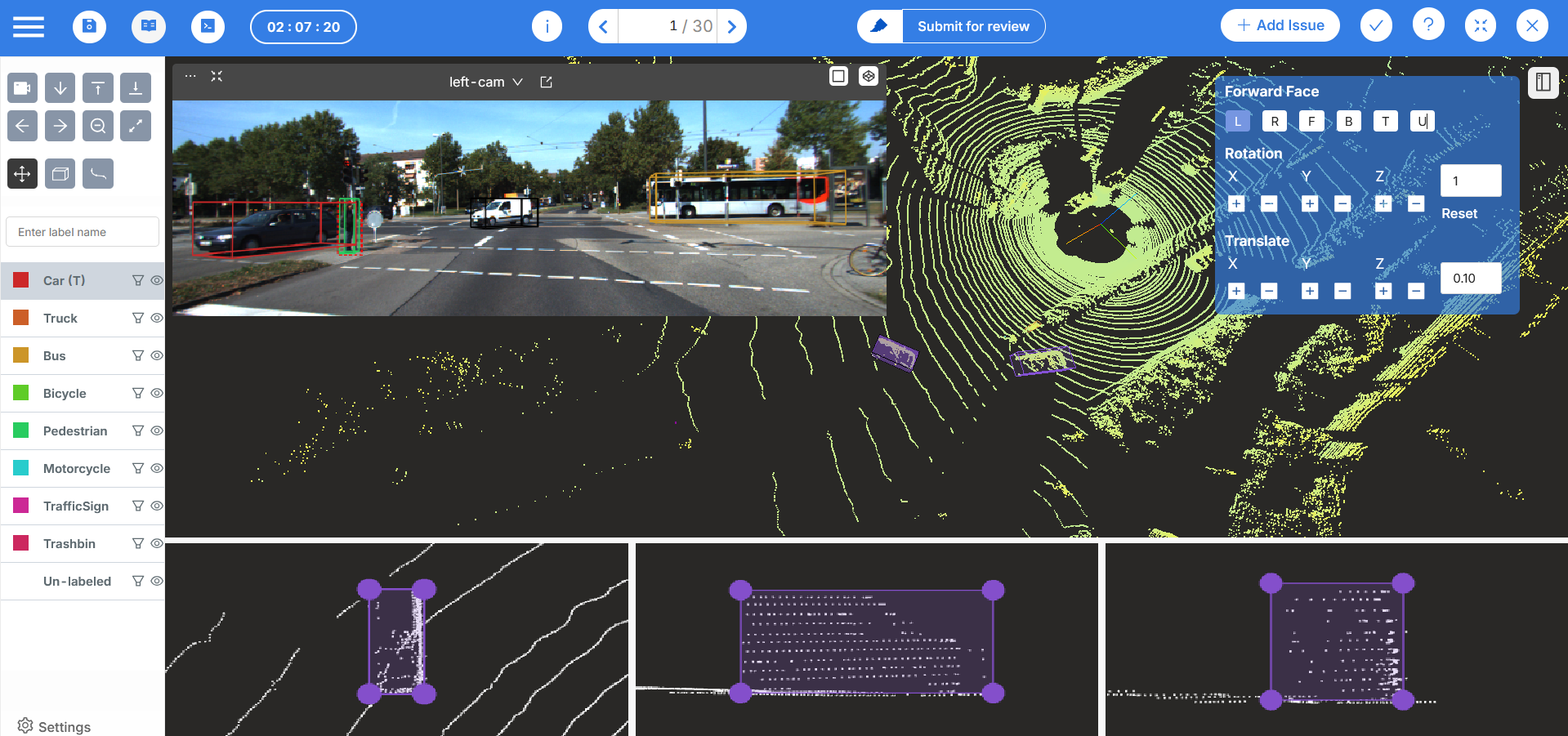
Multi-sensor annotation workflow
Coral Mountain is designed specifically for autonomous vehicles, robotics, and industrial automation pipelines. Unlike general-purpose tools, it offers native support for LiDAR annotation, sensor fusion workflows, and multi-modal data handling.
Supported sensors
Coral Mountain supports large-scale LiDAR and radar point clouds, RGB camera images, and single-channel inputs such as depth and thermal data. It also allows combining multiple image sources to provide richer context.
Sensor Fusion
Annotate LiDAR and camera data together while maintaining consistent object identities across sensors.
3D Visualization
Project LiDAR annotations onto camera feeds in real time for better accuracy and validation.
Object Tracking
Track objects across frames and sensors with consistent IDs, supported by tools that help maintain dimensional consistency.
Automation
Includes 1-click cuboid annotation, cuboid-to-segmentation conversion, and interpolation features that significantly reduce manual effort.
Export Formats
Supports exports aligned with KITTI standards, along with SDK-based format conversion and version control for annotations.
Annotation workflows
Flexible workflows with built-in QA options such as honeypot tasks and multi-annotator validation.
Workforce management
Manage multiple annotation teams or vendors within a unified interface.
Encord – Data-centric labeling platform
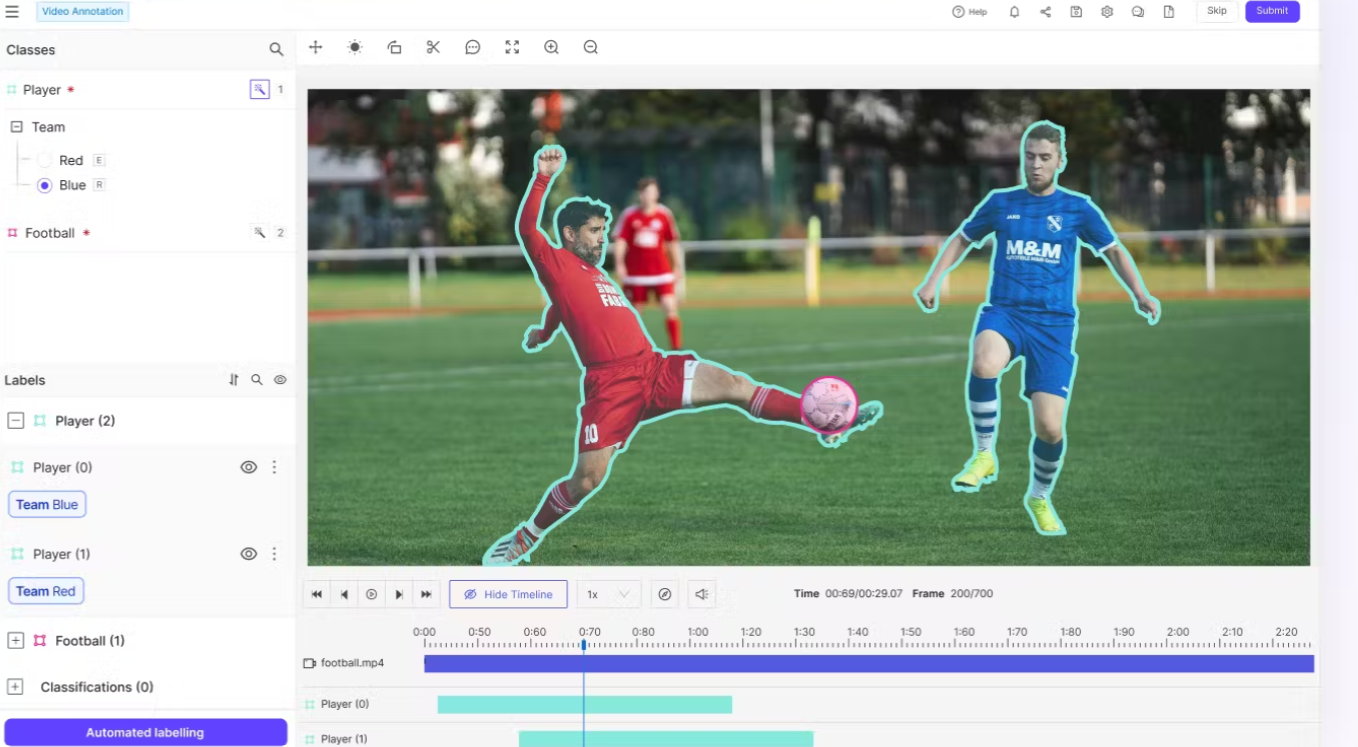
Video annotation interface on Encord
Encord positions itself as an enterprise-ready solution with strong compliance features and structured workflows.
Sensor Support
Limited LiDAR and radar support (still evolving), with no full multi-camera or single-channel support.
Workflow & QA
Highly customizable workflows with strong automation and active learning loops.
Scalability
Works well for growing teams focused on vision-based datasets.
Workforce management
Supports user roles and permissions but lacks multi-team management capabilities.
Best for
Teams focused on 2D image and video annotation with automation-driven workflows.
Kognic – Automotive-focused pipelines
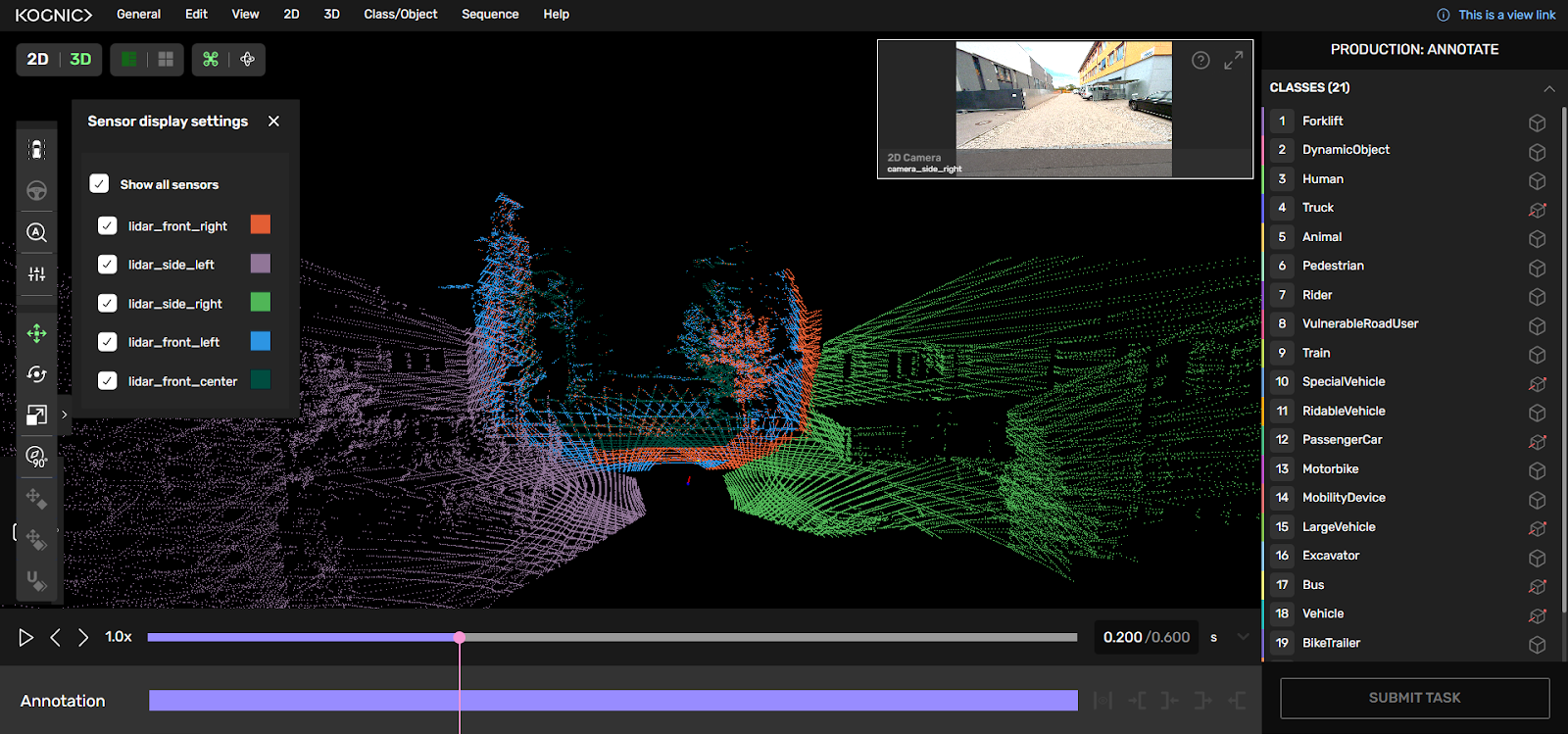
Kognic’s sensor fusion annotation platform for combining LiDAR and camera data
Kognic is tailored for automotive OEMs and Tier 1 suppliers, offering structured workflows for safety-critical applications.
Sensor Support
Supports LiDAR, radar, and multi-camera inputs.
Sensor Fusion
Provides tools to visualize and align annotations across sensors.
Workflow & QA
Includes predefined workflows and validation templates.
Object Tracking
Supports tracking with interpolation and point cloud aggregation.
Scalability
Designed for large-scale automotive datasets.
Limitation
The extensive feature set can make onboarding more complex.
Deepen AI – Calibration focused
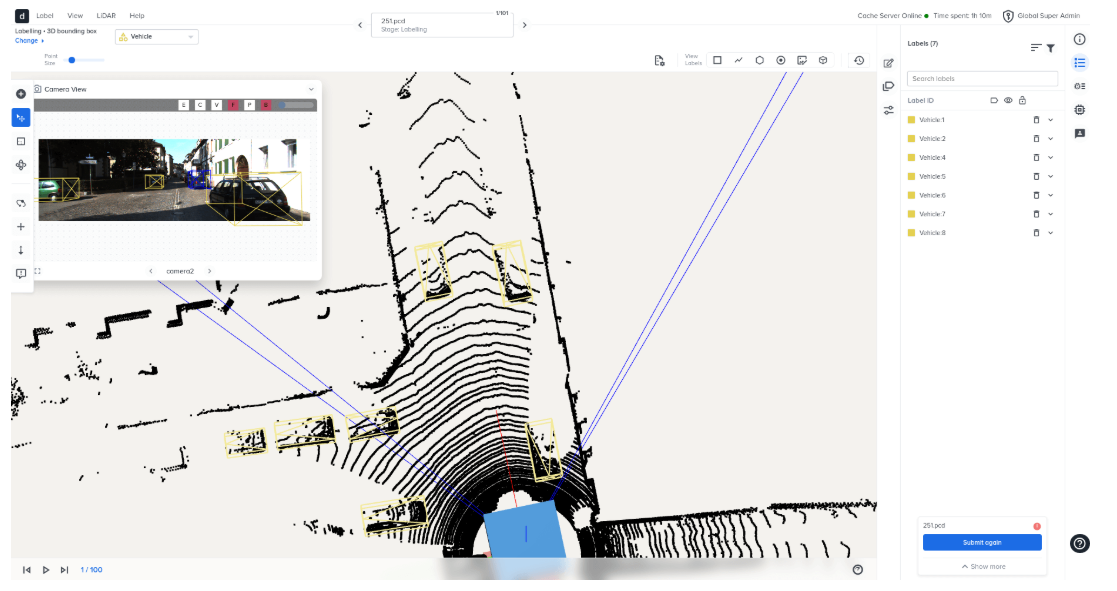
Deepen AI’s sensor fusion tool enabling synchronized labeling of LiDAR and image datasets
Deepen AI stands out for its strong calibration capabilities, which are essential for accurate multi-sensor alignment.
Sensor Support
Supports LiDAR, radar, and camera data.
Sensor Fusion
Strong capabilities in calibration and alignment.
Workflow & QA
Basic customization with limited QA depth.
Object Tracking
Supports tracking but lacks advanced automation tools.
Limitation
Missing features like interpolation and deeper QA workflows.
CVAT – Open-source flexibility, very limited LiDAR support
CVAT is a popular open-source annotation tool with flexibility for engineering teams.
Sensor Support
Basic LiDAR support with limited capabilities.
Sensor Fusion
Does not support projection of LiDAR annotations onto images.
Annotation tools
Limited to cuboid annotation for point clouds.
Workflow & QA
Fixed workflows with basic quality control.
Scalability
Self-hosted, requiring engineering effort to scale.
Best for
Research teams or small projects with customization needs.
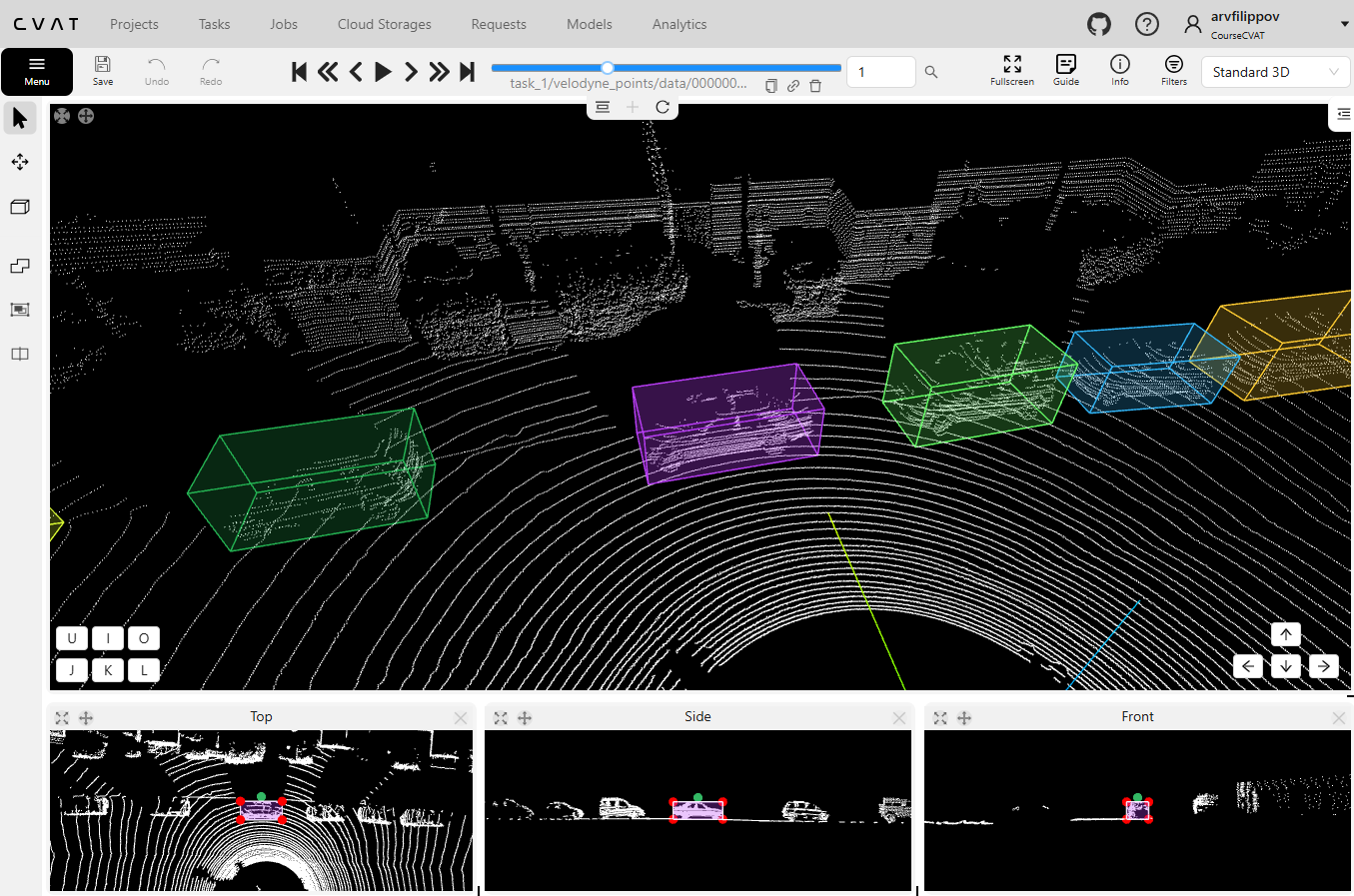
Cuboids are used for point cloud annotation in CVAT
Scale AI – One of the first LiDAR labeling tools
Scale AI is widely known for its large-scale data labeling services and early LiDAR support.
Sensor Support
Supports LiDAR, radar, and camera inputs.
Sensor Fusion
Offers multi-modal annotation with projection capabilities.
Workflow & QA
Combines automation with human-in-the-loop validation.
Scalability
Highly scalable with enterprise deployments.
Limitation
Primarily optimized for use with its own workforce rather than in-house teams.
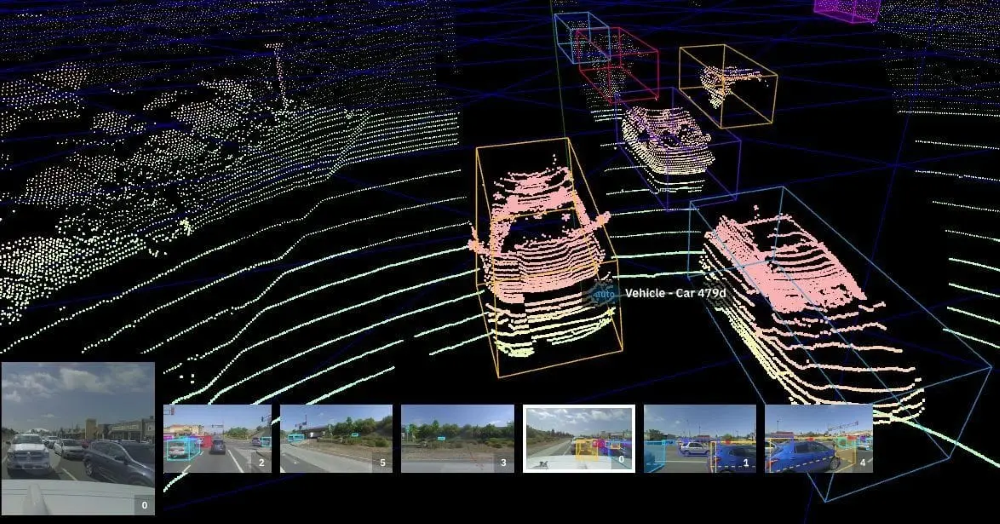
Scale AI’s annotation interface for multi-sensor labeling
SuperAnnotate – UI-first labeling with outsourcing options
SuperAnnotate focuses on ease of use and strong collaboration for 2D workflows.
Sensor Support
Supports camera data only; no LiDAR or radar support.
Workflow & QA
Custom workflows available but limited QA depth.
Workforce management
Includes team management and outsourcing capabilities.
Annotation export
Supports formats like COCO but lacks versioning.
Best for
Teams needing fast 2D annotation and outsourcing flexibility.
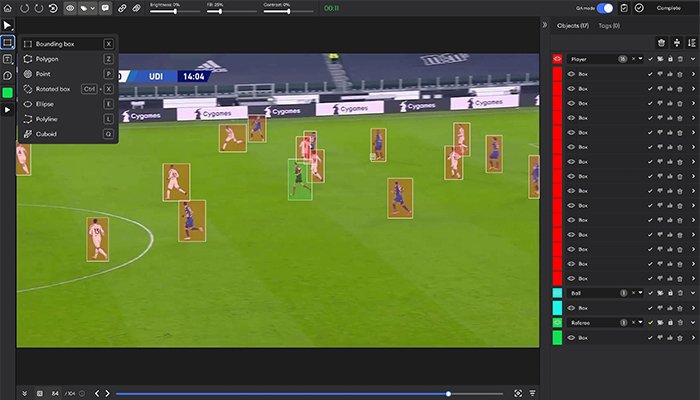
SuperAnnotate annotation platform interface for labeling images
Conclusion
Choosing the right sensor fusion annotation platform depends on your specific use case and scale:
Coral Mountain → Best suited for autonomous driving, robotics, and industrial automation workflows requiring full multi-sensor support
Kognic → Ideal for automotive pipelines with structured validation requirements
Deepen AI → Strong option when calibration is a priority
CVAT → Suitable for small-scale or experimental projects
SuperAnnotate → Best for simple 2D annotation workflows
Scale AI → Appropriate for teams outsourcing annotation tasks
Encord → Strong for 2D, data-centric workflows with compliance needs
For real-world sensor fusion challenges, purpose-built platforms like Coral Mountain provide a more balanced combination of automation, scalability, and precision—especially when working with complex, multi-modal datasets.
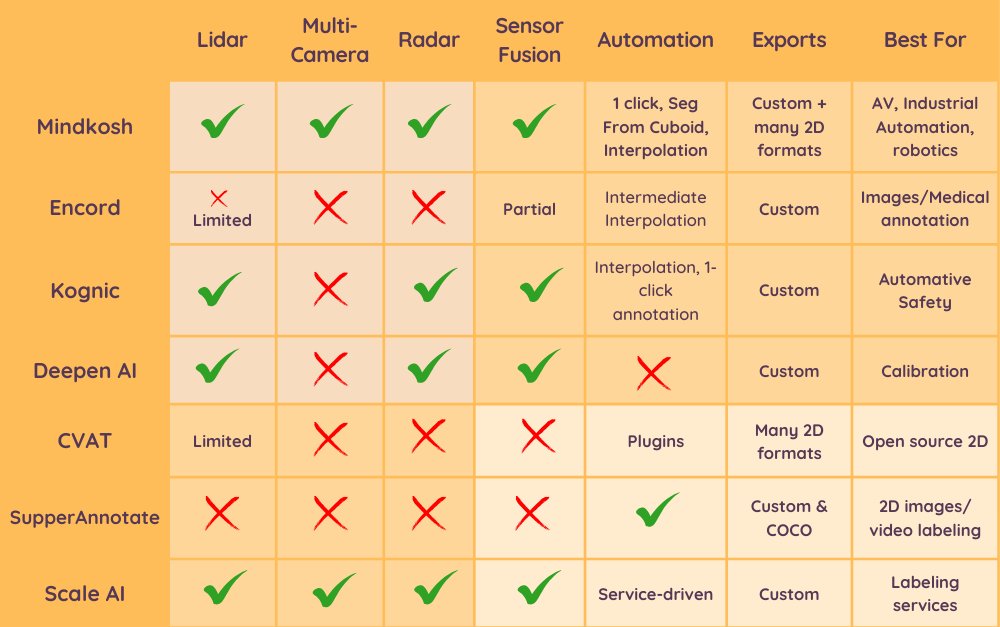
Comparison at a glance of top sensor fusion annotation tools in 2025 — LiDAR, radar, and multi-camera support for AV, Industrial automation and Robotics use cases.
Coral Mountain Data is a data annotation and data collection company that provides high-quality data annotation services for Artificial Intelligence (AI) and Machine Learning (ML) models, ensuring reliable input datasets. Our annotation solutions include LiDAR point cloud data, enhancing the performance of AI and ML models. Coral Mountain Data provide high-quality data about coral reefs including sounds of coral reefs, marine life, waves….