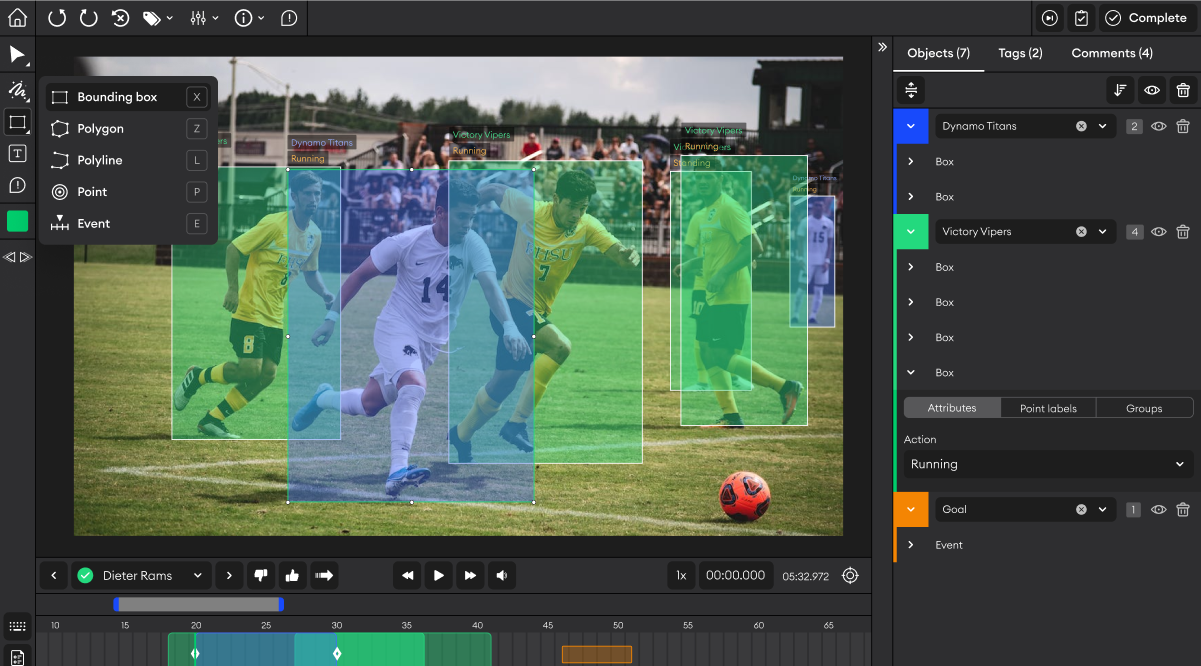
Balancing cost, control, and quality when labeling LiDAR, camera, and radar data for autonomous driving models
The data bottleneck in AV development
For teams developing advanced autonomous systems—whether for self-driving vehicles, robotics, or industrial automation—high-quality labeled data is not optional. It underpins perception, planning, and control.
As datasets grow to millions of LiDAR frames, camera images, radar sequences, and GPS metadata, a key question inevitably comes up:
Should you build an in-house annotation tool, or adopt a purpose-built platform like Coral Mountain?
While building internally may seem flexible and cost-effective at first glance, the reality is far more complex—and often more expensive. Years ago, building your own tooling was often the only option. Today, mature platforms have changed that equation.
This article explores the trade-offs across cost, flexibility, and quality—especially for AV teams working with multi-sensor data.
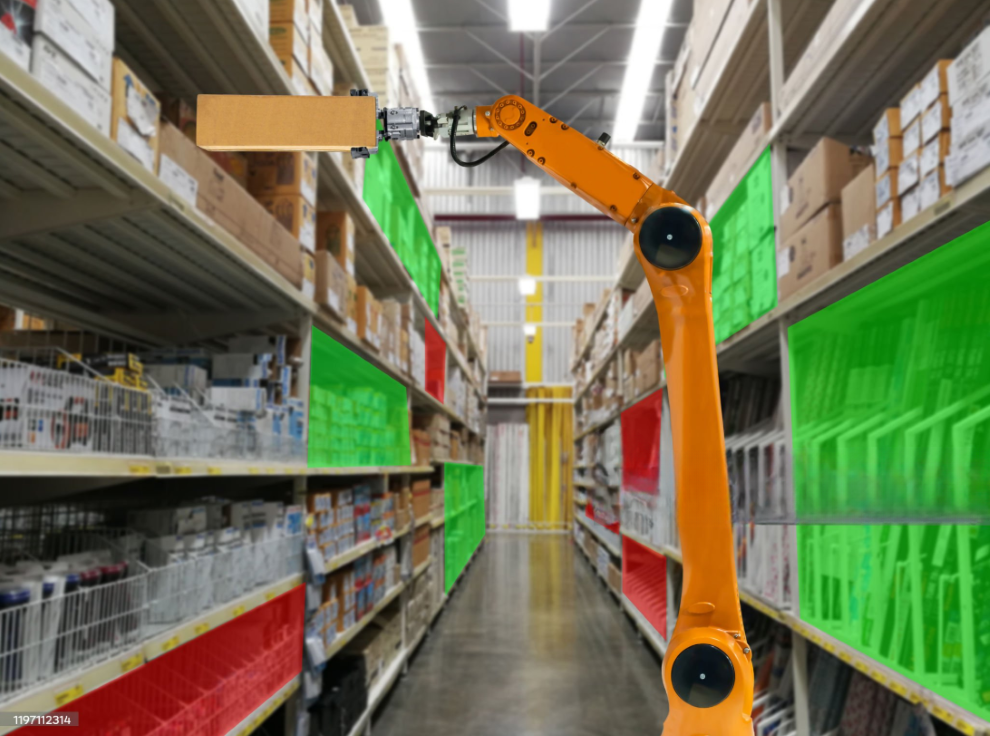
Accurate annotation is crucial to building safe and robust autonomous systems.
The three key dimensions: Cost, Flexibility, and Quality
Cost: The hidden price behind “free”
What building your own tool involves:
- Hiring frontend and backend engineers to develop 2D/3D annotation systems
- Setting up and maintaining infrastructure for storage, versioning, and data pipelines
- Handling ongoing maintenance, bug fixes, DevOps, and user support
- Developing tooling for both images and complex sensors like LiDAR
- Designing annotation workflows and scalable data pipelines
But these are just the visible costs. Hidden costs quickly accumulate:
- Months (often 6+ months) to deliver even a basic MVP
- Opportunity cost—time spent on tooling instead of your core product
- Technical debt as requirements evolve faster than your tool can adapt
- Design mistakes due to lack of experience with annotation workflows
This last point is critical: many internal tools fail not because of poor engineering, but because they weren’t designed with real annotation complexity in mind.
What you get with a platform like Coral Mountain:
- Immediate support for 3D point clouds, images, video, and radar
- Compatibility with specialized formats like depth maps and thermal imagery
- Built-in QA workflows, analytics, and issue tracking
- Automation features such as interpolation, auto-labeling, and interactive segmentation
- Scalable pricing aligned with actual usage
What initially looks like a “cheaper” build often becomes expensive once delays and resource drain are factored in.
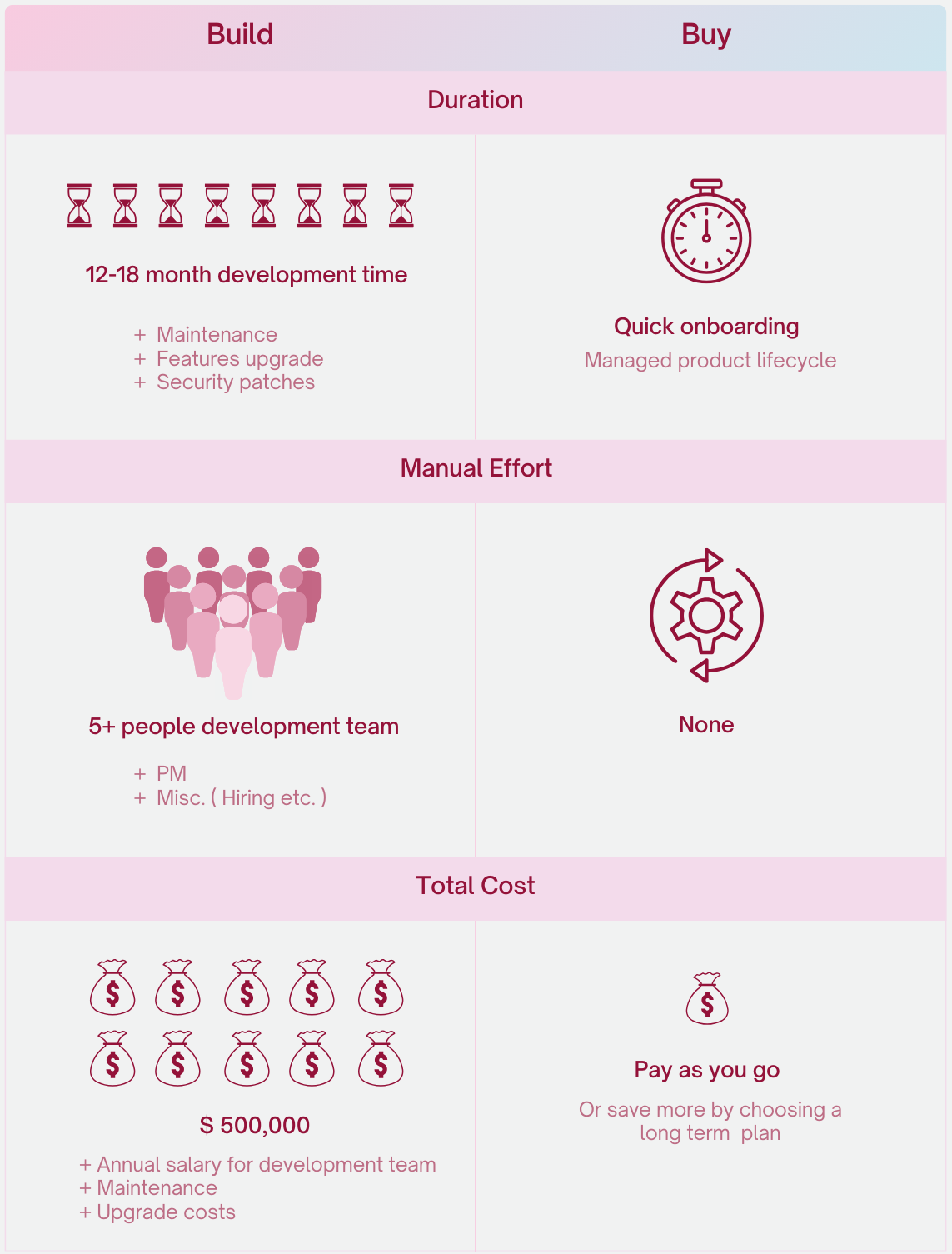
No such thing as a free lunch!
Flexibility: Control vs Capability
Building your own tool does offer full control. You can tailor every aspect of the UI and workflow to your needs.
But that control comes with a requirement: you must build everything yourself.
At minimum, you’ll need:
Custom UIs for LiDAR and camera fusion
Handling multiple data types—2D images, 3D point clouds, and video—is inherently complex. Sensor fusion adds another layer, requiring synchronization between LiDAR and camera data.
Reviewer tools and performance tracking
As your labeling team grows, you’ll need systems to monitor productivity, identify bottlenecks, and ensure quality through efficient review processes.
Data management infrastructure
You must support large-scale data ingestion, searching, filtering, versioning, and exporting. Linking LiDAR with corresponding camera data adds further complexity.
Annotation workflows
You’ll need to define multi-stage workflows:
- Labeling
- Validation
- Quality control
You’ll also need to decide how flexible these workflows should be across different tasks.
This list is far from exhaustive. Building a truly robust system requires continuous iteration.
With Coral Mountain, you can:
- Import data via UI, SDK, or cloud integrations
- Export annotations in multiple formats with version control
- Customize workflows and label ontologies
- Integrate your own ML models into the annotation loop
- Manage teams with role-based access
- Receive engineering support for custom integrations
Choosing a platform doesn’t mean sacrificing flexibility—it often means gaining it without the engineering burden.
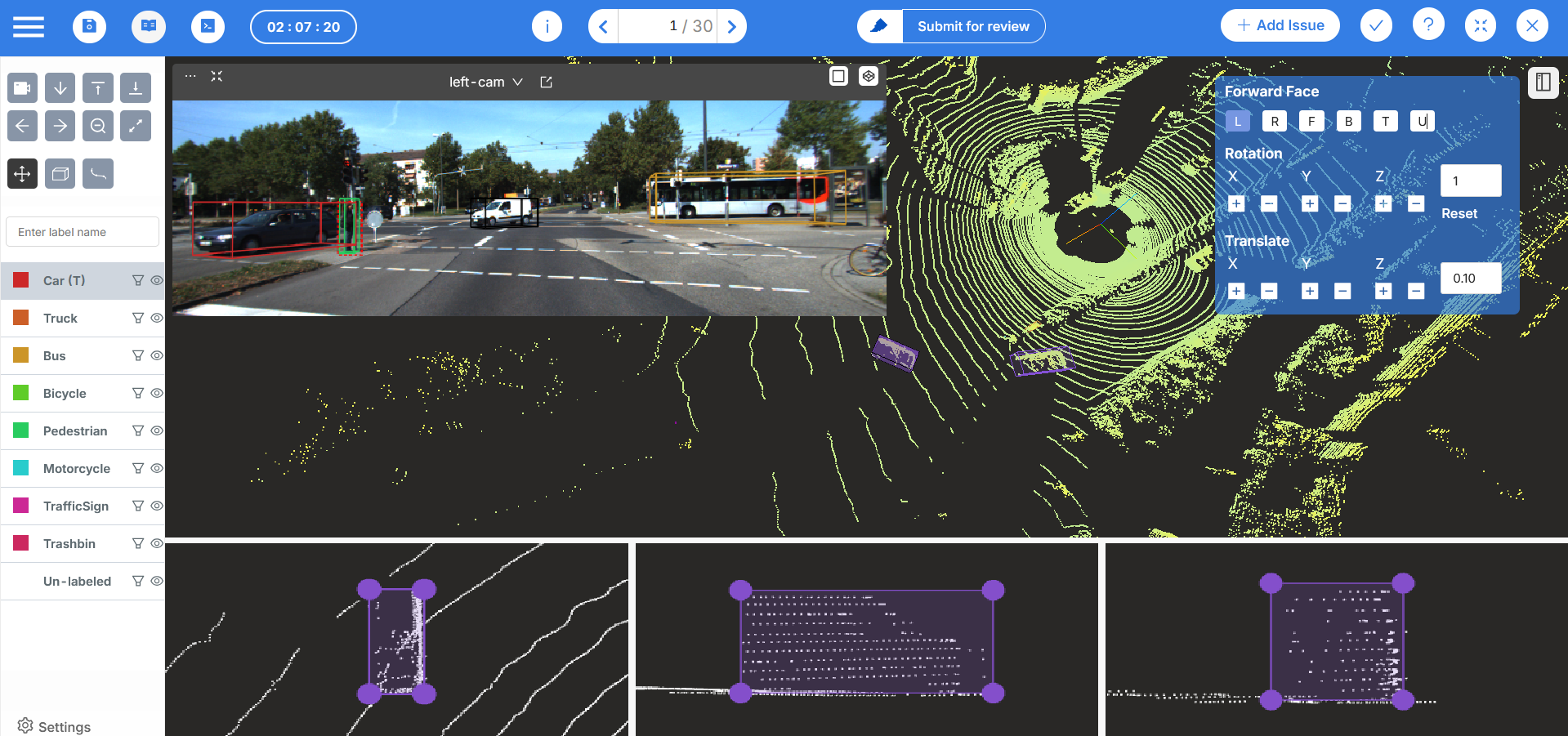
Coral Mountain Data supports labeling Lidar point clouds along with reference images with annotations automatically projected onto the images.
Quality: The make-or-break factor
Even the most advanced models fail without high-quality training data. Maintaining annotation quality at scale is one of the hardest challenges in AV development.
Building your own QA system is not straightforward. It requires deep understanding of how annotation teams actually work.
At a minimum, your system must:
- Support structured annotation workflows (labeling → validation → QC)
- Enable communication between annotators, reviewers, and stakeholders
- Provide context-aware feedback loops
- Reduce common annotation errors through smart tooling
A subtle but critical example:
In point cloud annotation, object visibility can vary across frames. Annotators may guess object dimensions when visibility is poor, leading to inconsistency.
A better approach is to “lock” object dimensions—define them once when clearly visible, then propagate across frames. This ensures consistency across sequences.
These kinds of refinements typically emerge only after large-scale annotation experience.
With Coral Mountain, you get:
- Configurable multi-stage workflows
- Multi-annotator validation and scoring
- Honeypot-based quality checks
- Built-in issue tracking with contextual comments
- Tools designed to prevent common annotation mistakes
Building these systems internally takes time—and during that time, low-quality data can accumulate and slow your progress.
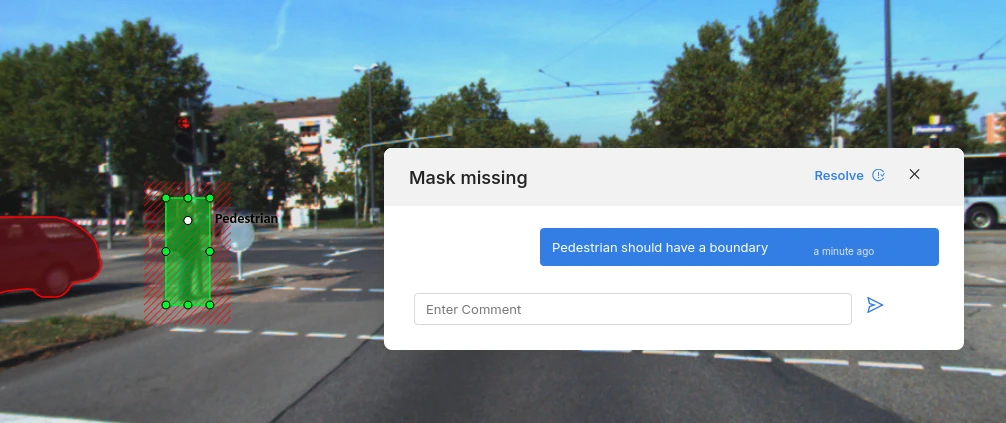
An Issue management system can be a massive help in ensuring clear communication lines among all stakeholders.
When does building your own annotation tool make sense?
Building in-house can still be the right choice in certain situations:
- You have a large engineering team (8+ developers)
- Your team already has deep annotation experience
- Your requirements are highly specialized and not supported by existing tools
- You can commit 8–18 months before production use
- You’re prepared to maintain and evolve the system long-term
For most teams, however, these conditions don’t apply.
Conclusion: Focus on models, not tooling
Building your own annotation tool may feel like gaining control. In practice, it often becomes a long-term cost center and distraction.
Your core goal is not to build tools—it’s to build safe, reliable, production-ready autonomous systems.
With Coral Mountain, you retain flexibility while gaining speed, reliability, and precision. The platform is designed for large-scale AV annotation and adapts to complex workflows and edge cases from day one.
If your priority is accelerating model development and reducing operational friction, the better investment is clear: focus on your models, and let the tooling work for you.
Coral Mountain Data is a data annotation and data collection company that provides high-quality data annotation services for Artificial Intelligence (AI) and Machine Learning (ML) models, ensuring reliable input datasets. Our annotation solutions include LiDAR point cloud data, enhancing the performance of AI and ML models. Coral Mountain Data provide high-quality data about coral reefs including sounds of coral reefs, marine life, waves….